
Underpinning is a method used to stabilise the foundation of small to medium-sized buildings that have settled or lost support. This is a common issue for many homes and buildings worldwide, but it’s often not discussed in reports or records. One effective way to underpin a structure is by using screw piles (also known as helical piles) and piers.
Screw piles and piers are strong, durable supports that are installed deep into the ground to reach stable soil layers beneath the weaker soils that are causing the problem. These supports help prevent further movement of the structure, making sure it stays stable and safe. It’s important to note that underpinning with screw piles or helical piles is not designed to lift the structure back to its original level, but to keep it from moving any further.
By using this method, we provide a long-term solution to foundation settlement, ensuring the building remains secure without the need for major lifting or disruptive work.

This project involved the installation of screw piers to stabilise and support a compromised concrete slab. Over time, soil movement and settlement had weakened the foundation, creating uneven surfaces and the risk of further structural damage.
Our team installed heavy-duty screw piers beneath the slab, drilling them deep into stable ground to provide a solid load-bearing base. This method transfers the weight of the structure onto firmer strata, preventing further subsidence and restoring long-term stability.
In this project, our team installed a screw pier to stabilise and support a building structure located in a waterfront position where land access was restricted. Using a barge-mounted rig, we were able to safely and efficiently drive the pier deep into stable ground beneath the waterline.
This method provided a strong foundation for the structure, transferring loads onto firmer strata and preventing further settlement or movement. By working directly from the barge, we minimised disruption to the property and surrounding area while still achieving precise placement and secure installation.

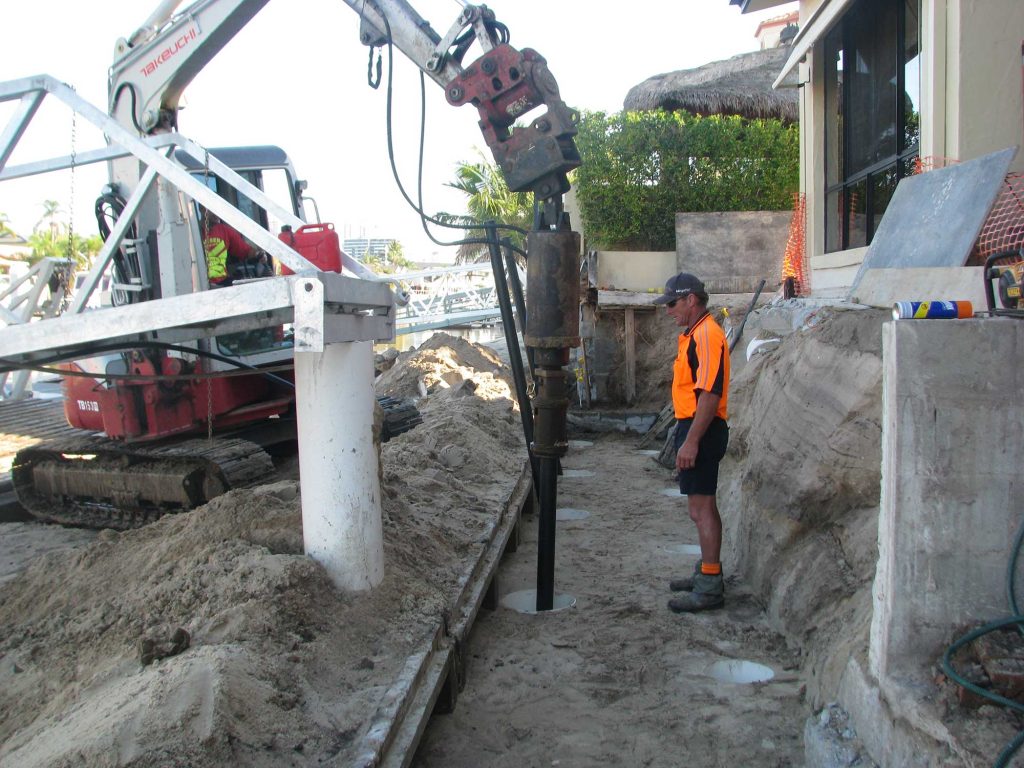
This project focused on strengthening a retaining wall through the installation of screw piers, providing additional stability to prevent movement and failure. Over time, shifting soils and water pressure had placed strain on the wall, making reinforcement essential.
Our team installed heavy-duty screw piers at precise intervals to transfer loads into more stable ground. A PVC pipe was used for the headstock, ensuring accurate alignment and providing a durable connection between the pier and the wall structure. This method enhanced both the strength and longevity of the retaining wall while minimising disruption to the surrounding area.
This project involved the installation of staggered screw piers to reinforce the foundation of a major retaining wall. The staggered layout was designed to distribute loads evenly and provide maximum stability, ensuring the wall could withstand ongoing soil pressure and environmental forces.
Each screw pier was fitted with a PVC headstock support, allowing for precise alignment and a secure connection to the retaining wall structure. This system not only strengthens the foundation but also extends the lifespan of the wall by reducing the risk of settlement or structural failure.


In this project, traditional screw piers were deemed unsuitable due to the site’s constant exposure to saltwater, which would have compromised their durability over time. To provide a long-lasting solution, our team designed and installed PVC concrete-filled piles driven to a depth of four metres.
The PVC encasement acts as a protective barrier against corrosion, while the concrete core delivers the necessary load-bearing strength to support the structure above. This system ensures the foundation remains stable and resistant to the harsh marine environment.
This project involved stabilising a structure located along the main river where no land access was available. To overcome this challenge, our team utilised a barge and excavator to install screw piers directly from the water, ensuring the foundation could be reinforced safely and efficiently.
The barge provided a stable platform for heavy machinery, while the excavator allowed for precise placement of each screw pier into the riverbank. This approach ensured that the structure received the necessary deep foundation support without disturbing surrounding properties or the natural environment.
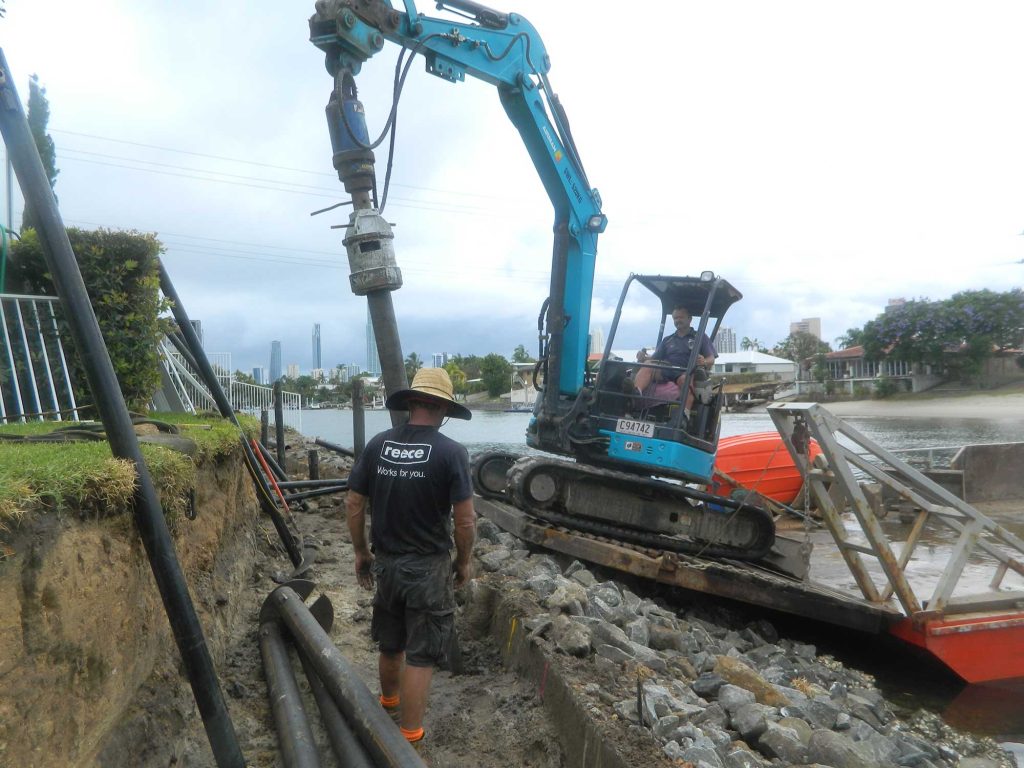

This project addressed a foundation failure affecting a unit complex, where soil movement had caused instability and risk of further structural damage. To prepare for underpinning works, an excavator was used to carefully expose the problem areas and create access for the installation of screw piers.
The preparation phase was critical in ensuring the screw piers could be positioned at the correct depth and alignment to provide maximum support. Once installed, the piers transferred the building’s load onto stable ground, halting further settlement and restoring confidence in the foundation’s integrity.
This project required the construction of a new retaining wall in a location where land-based access was not possible. To complete the works, our team deployed a barge and excavator to install a series of staggered screw piers that would form the foundation for the new structure.
The staggered layout was carefully engineered to distribute loads evenly and provide maximum stability for the wall. Working from the barge allowed us to operate heavy equipment safely on the water, ensuring precise placement of each pier while minimising disruption to the surrounding environment.
